Daytrip – UX Research Case Study
Role: UX Researcher
Team: UX Designers, Developers
Tools: Google Forms, Zoom, Miro, Figma
Overview
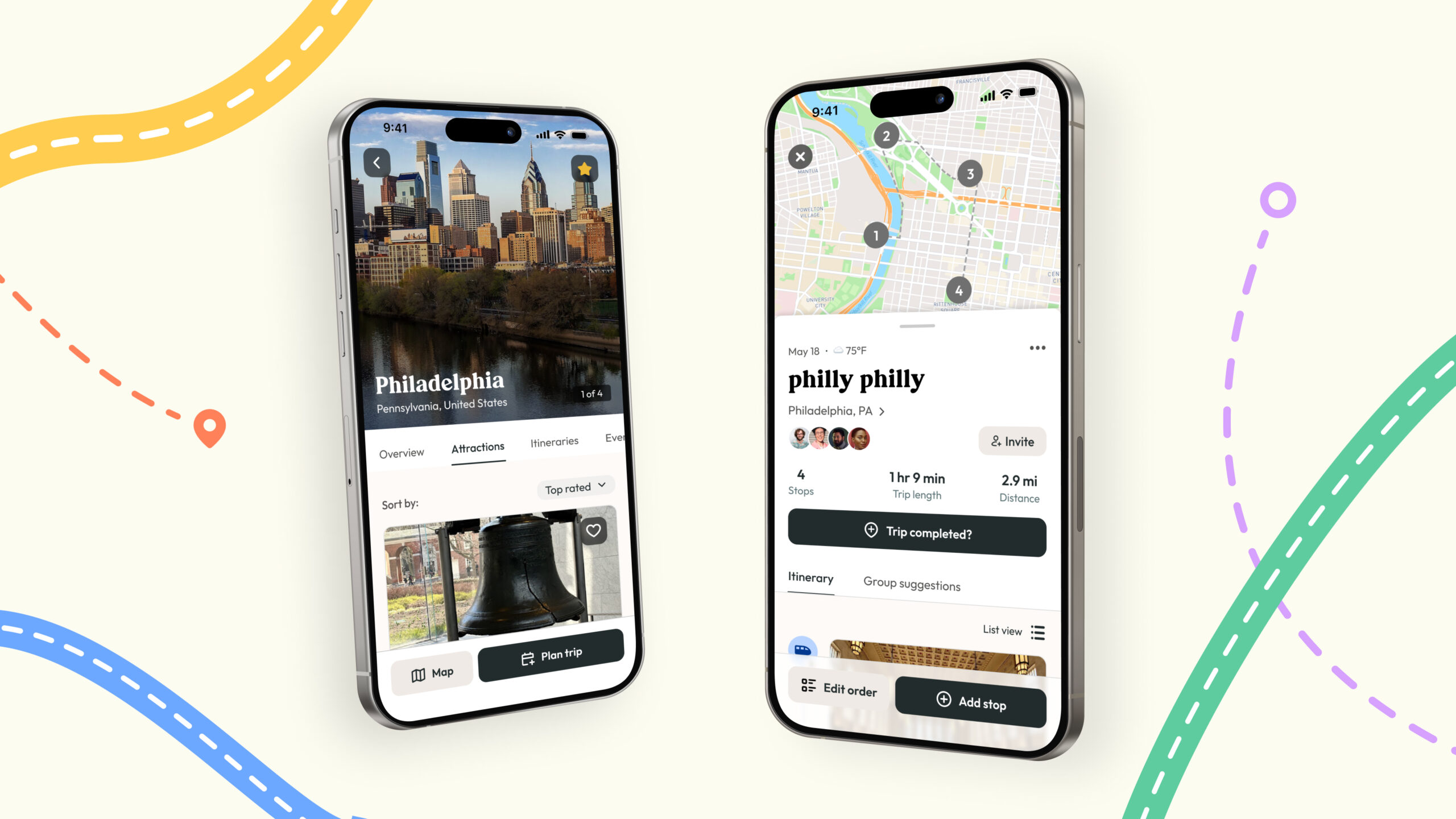
Daytrip is a mobile app designed to help users easily plan personalized day trips. The goal was to simplify the planning experience, add flexibility for on-the-go changes, and integrate collaborative features.
Problem
Most travel apps fail to address the specific needs of day-trip planning—especially for users who want to collaborate with friends, adapt plans, and make decisions quickly.
Scope & Restraints
- Develop a functional native prototype focused on day trip planning
- Incorporate personalized suggestions, flexible itinerary creation, and friend collaboration
- Maintain design accuracy while balancing technical feasibility
- Operate within a 3-term timeline and MVP scope
Users
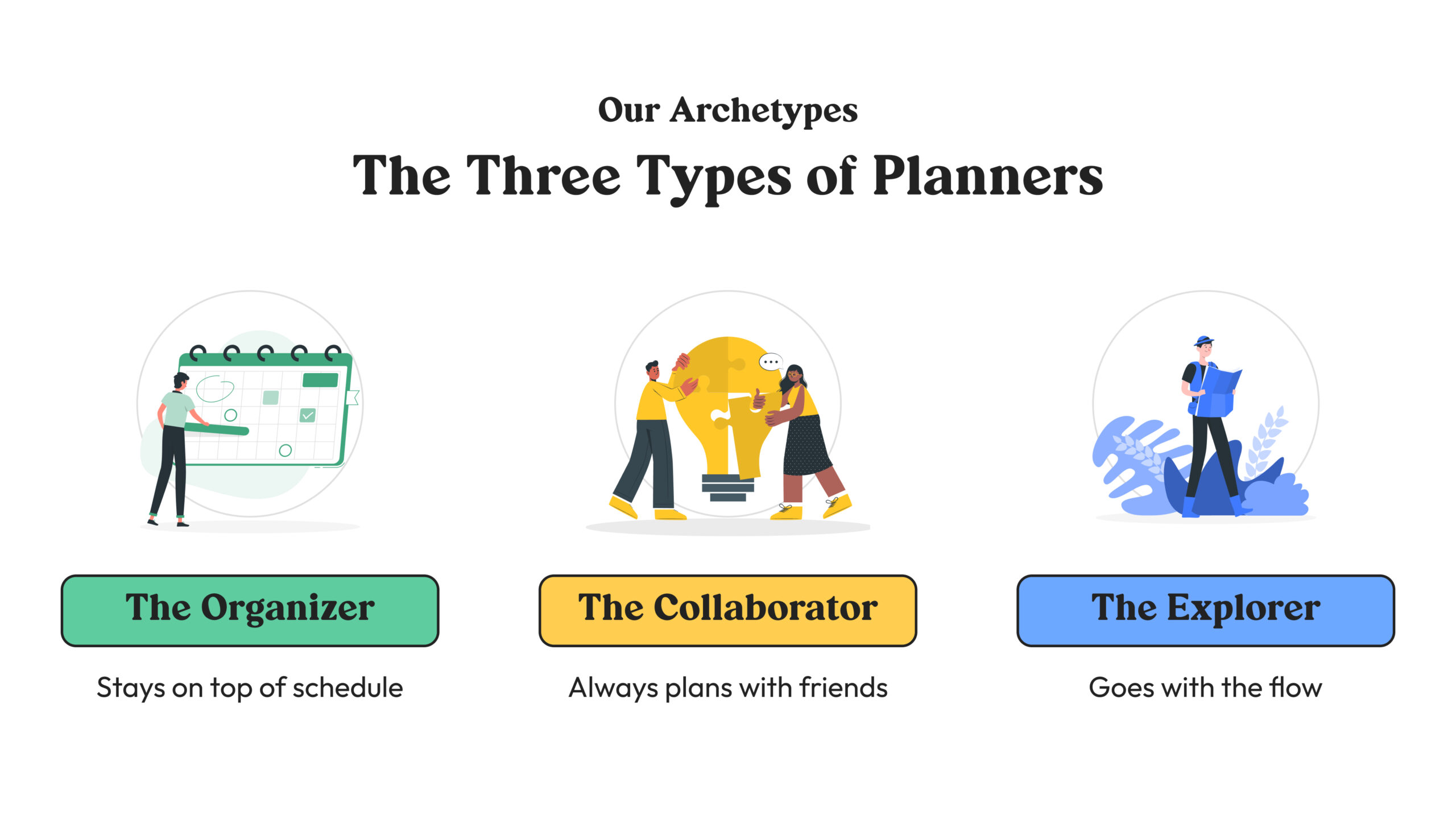
My Role
- Designed and moderated user surveys and interviews
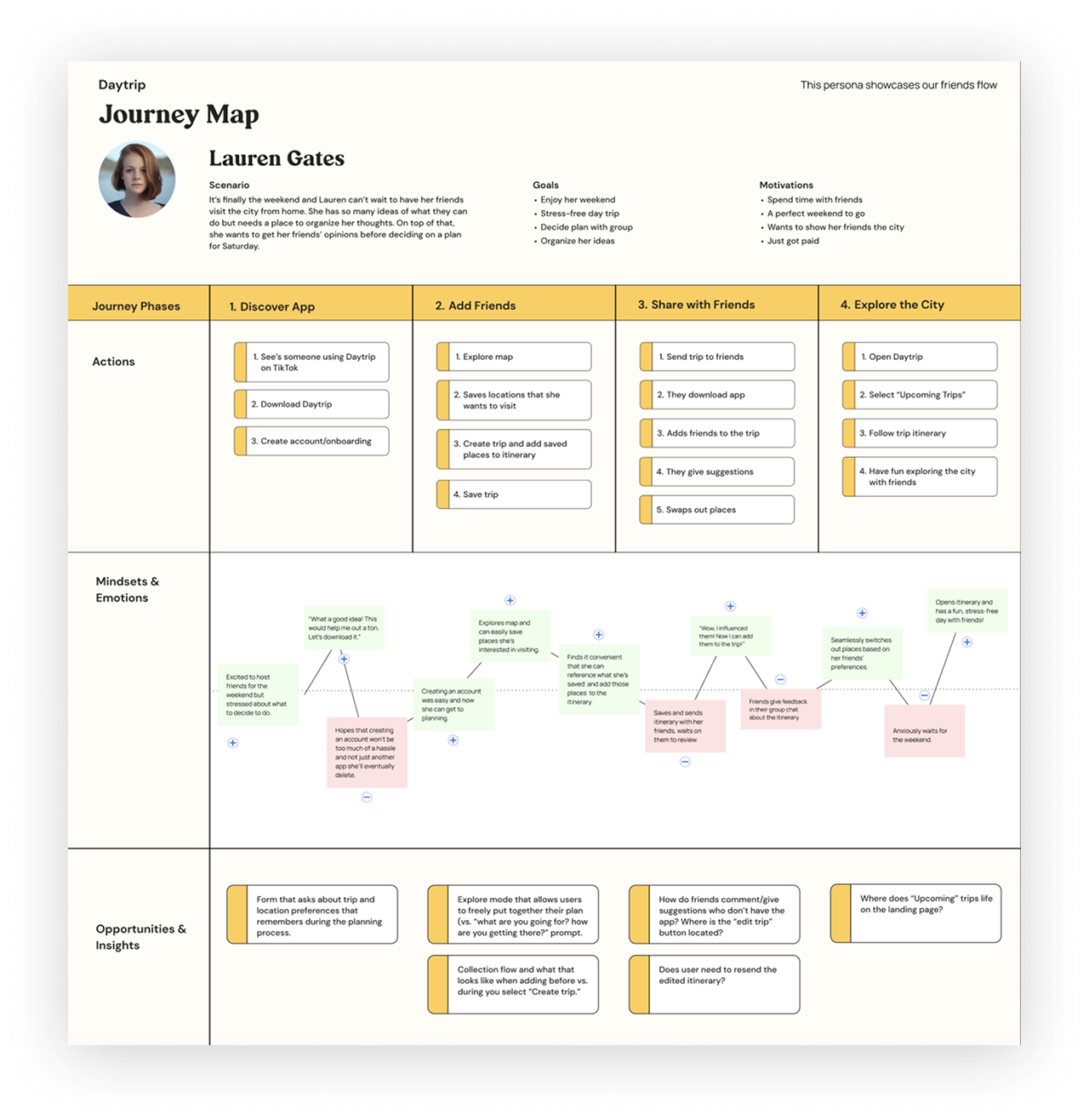
- Created personas, empathy maps, and journey maps
- Analyzed research findings and presented recommendations
- Collaborated with design team to shape MVP features
Process
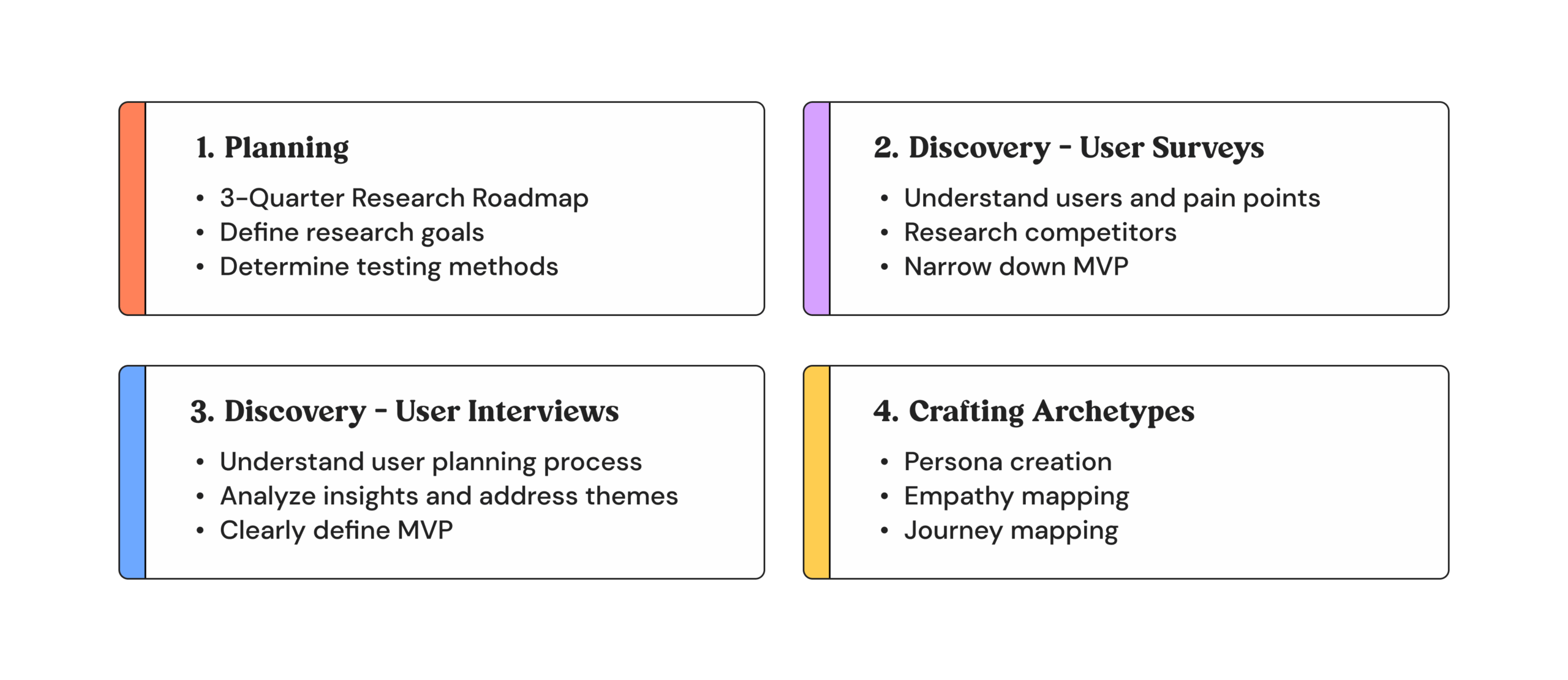
1. Planning
Defined research goals and selected qualitative and quantitative methods to understand how users currently plan trips, what pain points exist, and what features they value most. Established a research plan, discovery survey, and success criteria.
2. User Surveys
Collected insights on planning behaviors, pain points (like coordination with friends, last-minute changes, and unreliable information), and competitor usage. This helped define our initial design direction.
Planning Behaviors
- Often group-based
- Planned around one central activity
- Unorganized, multiple apps used
- Discover places on social media, Google search results, recommendations
User Pain Points
- Closures, incorrect information
- Transportation and parking
- Unfamiliarity with location
- Paradox of choice
- Weather
- Communication within group
Competitors
- Google Maps
- Yelp
- Apple Maps
- TripAdvisor
- Wanderlog
3. User Interviews
Conducted 1-on-1 interviews to understand users’ thought processes. Key findings:
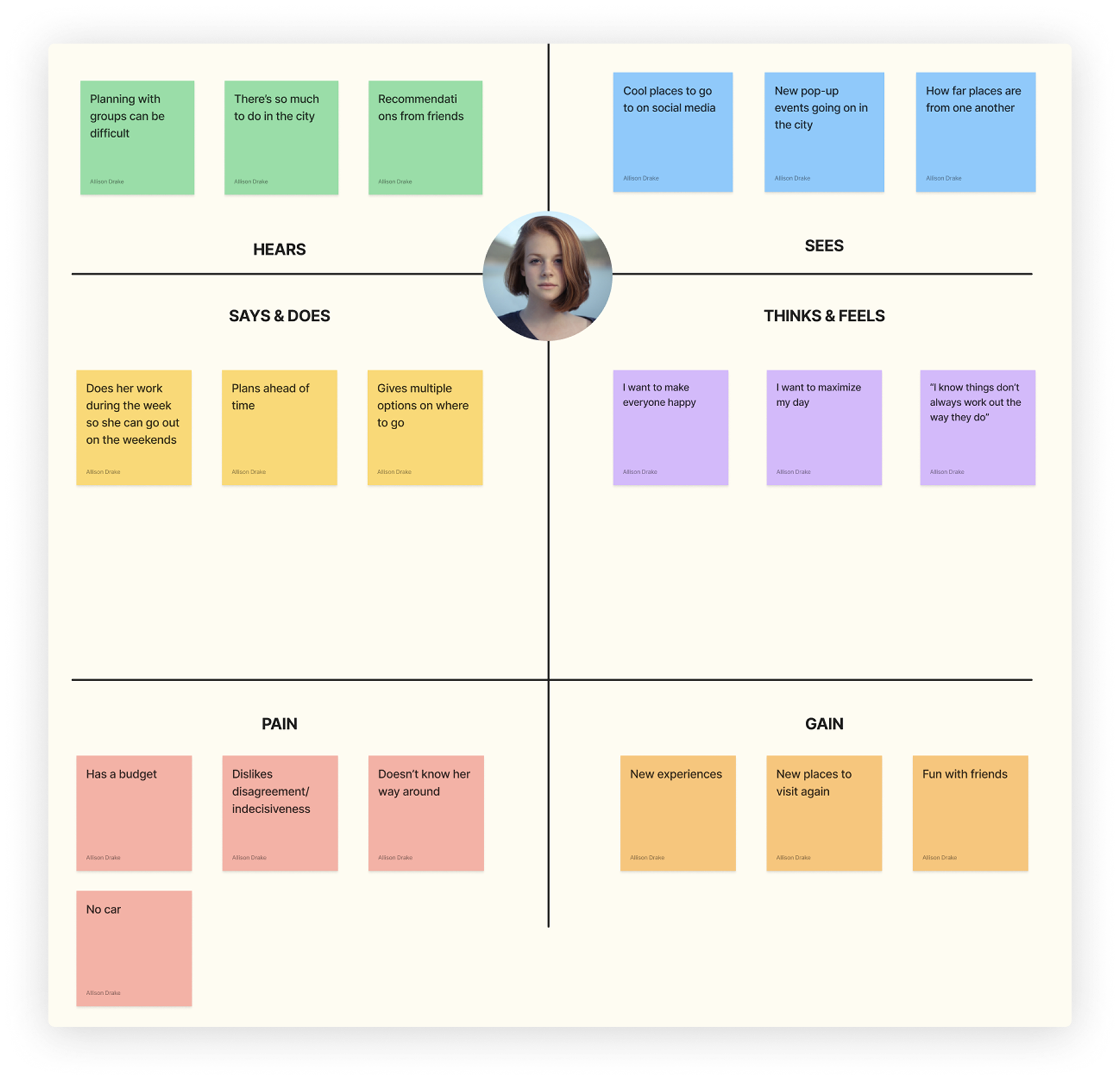
4. Crafting Archetypes
Based on insights, I built out personas and mapped their behaviors through empathy and journey maps. These informed use cases and prioritized features.
Outcomes
- Defined MVP based on research-backed user needs
- Integrated collaboration flow directly driven by interview findings
- Created a roadmap for testing low-, mid-, and high-fidelity prototypes
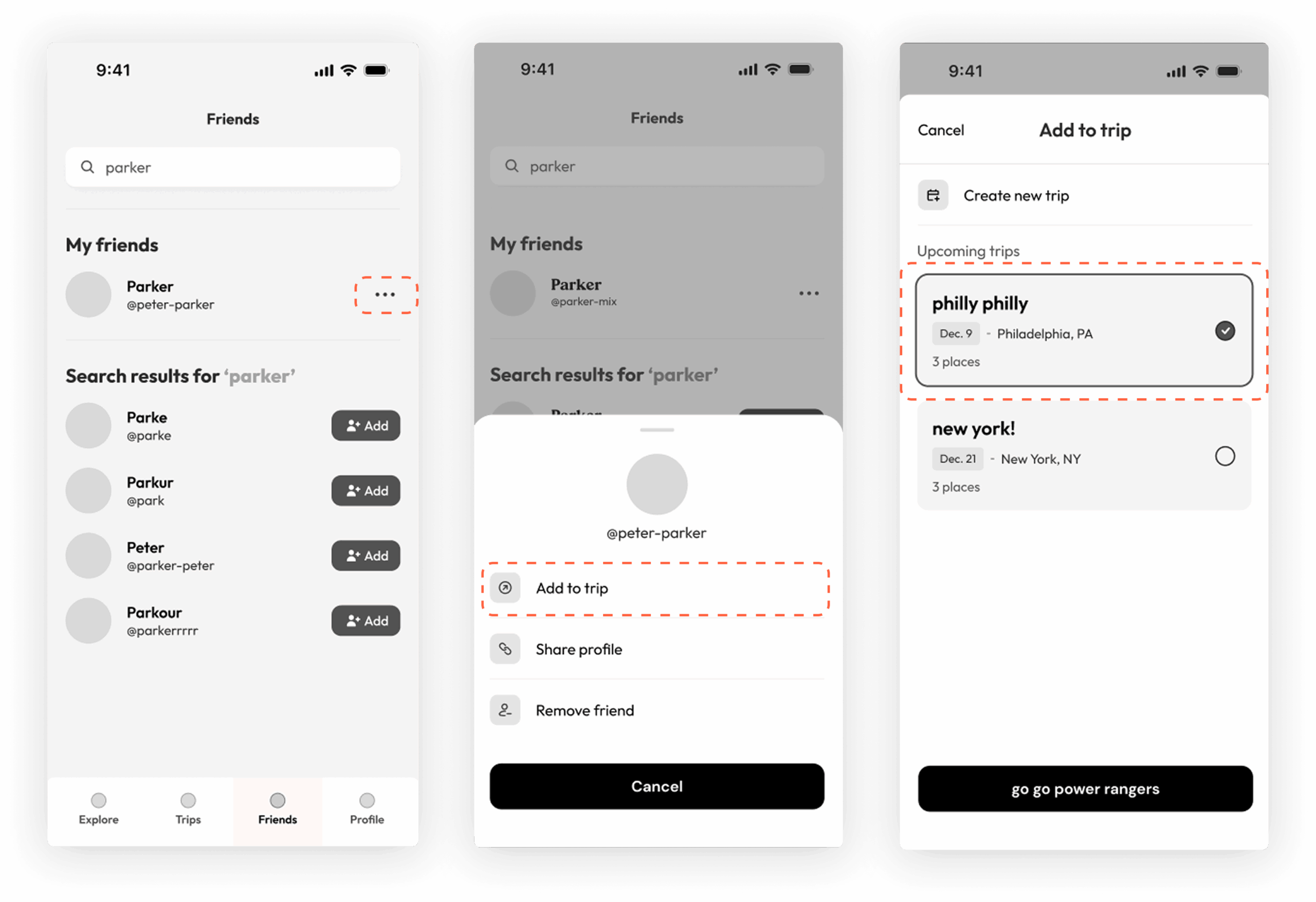
Next Steps: Conduct usability testing on mid/high-fidelity prototypes and refine collaboration and itinerary features.